
West Coast pipeline deemed ‘project of national interest’
The project, owned by Ottawa and Alberta, will reserve a 10% equity stake for Indigenous partners.
Key Takeaways:
- Prime Minister Mark Carney officially listed the Pacific Link West Coast oil pipeline as a project of national interest under the Building Canada Act.
- Jointly owned by Ottawa and Alberta alongside Trans Mountain Corp. and Pembina Pipeline, the project reserves a 10% equity stake for Indigenous partners.
- Designed to export one million barrels per day along a southern B.C. route, the project undergoes an accelerated single federal review targeting finalized permits by September 2027.
The Whole Story:
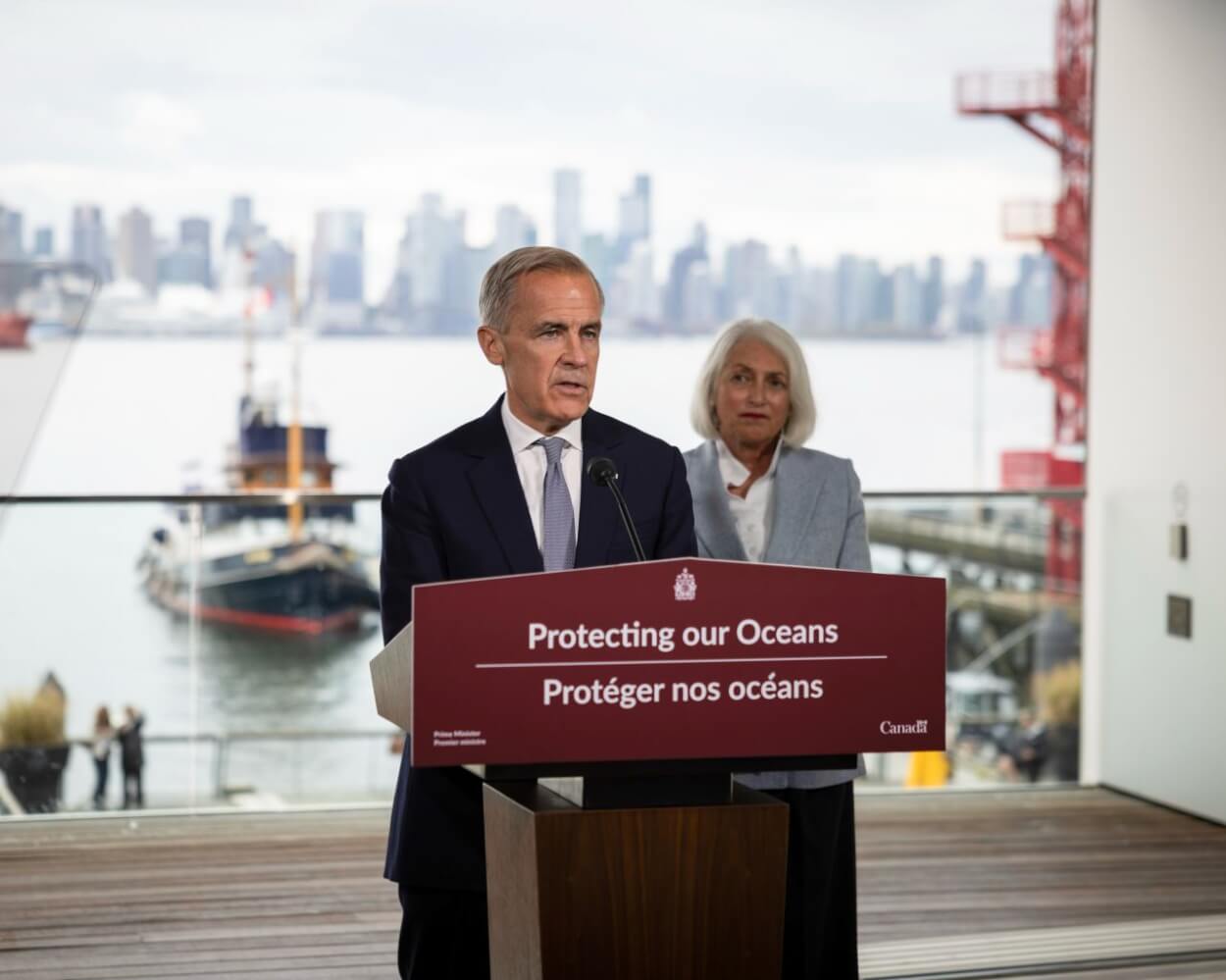
Prime Minister Mark Carney has formally designated the proposed Pacific Link pipeline—formerly known as the West Coast Oil Pipeline—as a project of national interest under the federal Building Canada Act. The decision, announced in Fort McMurray alongside Alberta Premier Danielle Smith, accelerates regulatory review processes to construct a new one-million-barrel-per-day crude oil export corridor to Canada’s West Coast.
The Pacific Link pipeline will be jointly owned by the federal government and the Government of Alberta, with technical leadership provided by Trans Mountain Corporation and private-sector partner Pembina Pipeline Corporation. The project framework includes a minimum 10% equity ownership stake reserved for Indigenous communities along the route, supported by federal and provincial Indigenous Loan Guarantee Programs.
To mitigate environmental impact, project planners selected a southern route that bypasses ecologically sensitive regions, including the Great Bear Sea and British Columbia’s North Coast. The federal Major Projects Office (MPO) and the Canada Energy Regulator (CER) will lead a single integrated federal review process over the next year to finalize project conditions, environmental safeguards, and Indigenous benefit frameworks by September 1, 2027, paving the way for construction.
Federal economic projections estimate that expanding West Coast export capacity by one million barrels per day will reduce Canada’s reliance on U.S. refinery markets, support 140,000 direct and indirect jobs across Canada, and add over $20 billion annually to national GDP. Cumulative government revenues generated by the expansion are projected to reach $100 billion by 2060.
“Canada has a once-in-a-generation opportunity to become a global energy superpower,” said Prime Minister Mark Carney. “To create hundreds of thousands of good jobs. To transform our economy. To diversify our trade. To become less reliant on a single trade partner… Pacific Link is critical to this mission.”
Alberta Premier Danielle Smith welcomed the designation as a breakthrough for provincial energy exports. “Today marks a significant victory for Alberta’s and Canada’s energy future,” Smith said. “The listing of Pacific Link as a project of national interest demonstrates what can be achieved when governments work together to advance nation-building infrastructure.”
The pipeline project will tie into broader national export and industrial decarbonization initiatives, including planned expansion of the Roberts Bank container terminal in B.C. and ongoing provincial-federal collaboration on the Pathways Alliance carbon capture and storage network in Northern Alberta.