
Up There: Santa comes early in Northern Canada
Holiday logistics for the nation’s most remote communities are complex.
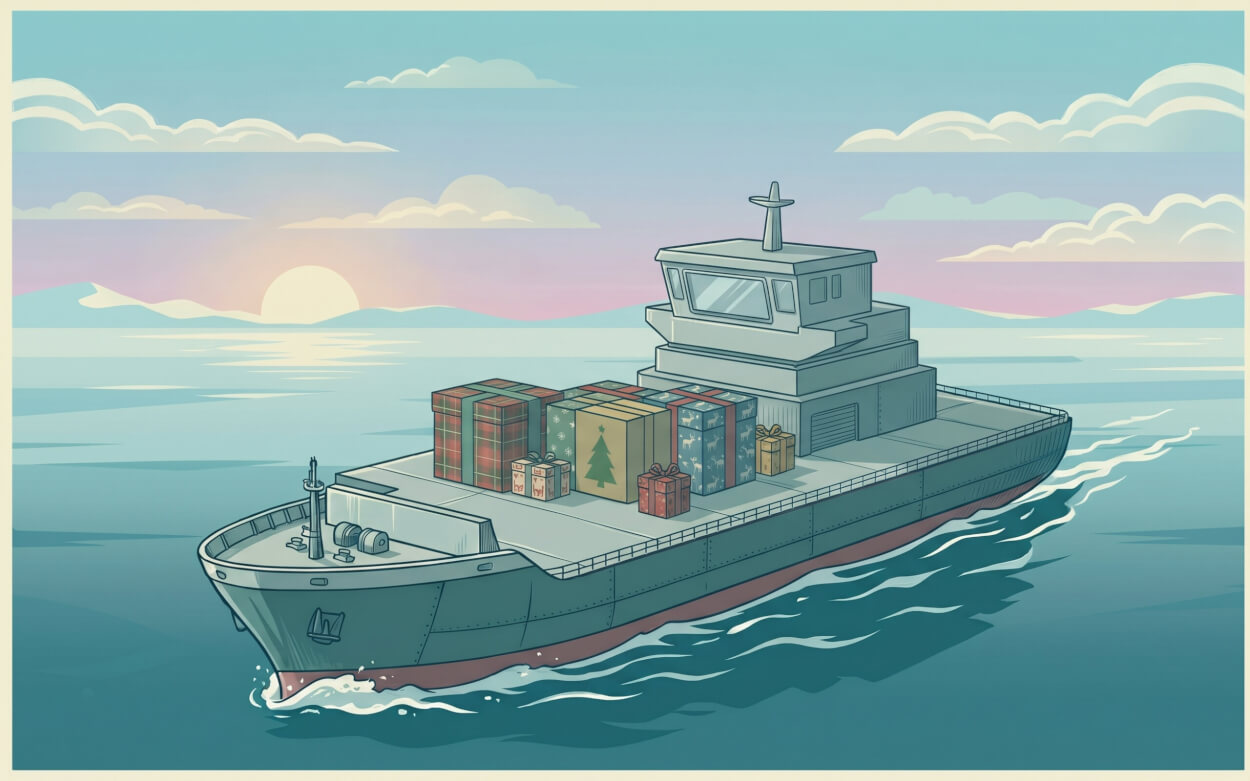
In most Canadian communities, Christmas shopping begins after Halloween. In Grise Fiord, Nunavut, that may already be too late.
Canada’s northernmost community has about 150 people. It’s on the southern coast of Ellesmere Island, 1,160 kilometres north of the Arctic Circle. No roads connect it to any other community. Airplanes carry passengers, mail and essential cargo, but almost everything else arrives by the annual sealift.
Grise Fiord is, quite literally, a one-boat town.
So, Christmas gets complicated.
If a parent wants to place a bicycle, hockey net, television or oversized toy beneath the tree without paying the extraordinary cost of air freight, the purchase must be made while much of southern Canada is still thinking about sunscreen and patio furniture. The gift must be ordered, delivered to a southern terminal, packaged for marine transport and loaded aboard the ship before it sails north.
This year, the vessel serving Grise Fiord arrived on Sept. 1, and the community’s Christmas cargo was aboard.
While children elsewhere were returning to school, some of the presents meant for Christmas morning were already being unloaded on the beach.
This raises an important logistical question that never appears in the classic Christmas stories: where do parents hide a bicycle for four months in a small Arctic home?
Behind the groceries? Inside a shipping container? Beneath a tarp in the shed? Perhaps next to the year’s supply of toilet paper, canned food and laundry detergent?
Maintaining the magic of Christmas in Grise Fiord requires operational discipline. Children must not be allowed near the wrong crate. Packing lists must be concealed. Helpful relatives must remember which boxes are ordinary supplies and which contain classified cargo from Santa.
Santa Claus may operate from the North Pole, but even he apparently needs local subcontractors.
His southern procurement team purchases the gifts. A trucking company delivers them to the marine terminal. A freight forwarder prepares the paperwork. Longshore workers load the vessel. A shipping company navigates the shrinking summer window in northern waters. Local crews unload the cargo. Finally, parents provide secure warehousing and last-mile delivery from the hiding place to the Christmas tree.
It may be the most geographically suitable Santa supply chain in the world.
There is humour here, but there is also a lesson about northern life. In southern Canada, convenience has made logistics nearly invisible. We click a button and grow irritated when a package takes three days to arrive. In Grise Fiord, families plan months because geography still sets the schedule. The ocean opens when it opens. The ship arrives when ice and weather permit. If something is forgotten, there may be no other boat until the following year.
Sealift is therefore much more than a shipping service. It is an annual act of preparation. Modern Nunavut homes often include dedicated storage areas because buying a year at a time is common; it is practical economics. Once the sealift departs, the community must live with what arrived and what did not.
Christmas adds secrecy to the inventory management problem.
Yet there is something wonderful about presents spending months travelling before waiting quietly through the growing darkness for Christmas morning.
It makes Santa’s story feel almost plausible.
After all, if a ship can carry a child’s Christmas present thousands of kilometres across Arctic waters, if an entire community can keep the secret for months, and if parents can turn marine freight schedules into Christmas magic, perhaps believing in Santa is not so unreasonable.
At least, I still believe.