
Take a peek inside 720 Modular’s playbook
Complex modular demands something the single-family playbook doesn’t account for: a quarterback.

In football, the quarterback is pivotal.
But it’s still a team sport.
This is an analogy Troy Ferguson, founder of 720 Modular, uses to describe the company’s role in the modular construction ecosystem, and it holds up better than most. On any given project, 720 Modular works alongside architects and engineers, a factory building modules offsite, a transportation company hauling them to site, a crane operator setting them in place, and a general contractor handling the finishing work.
Each one of these “players” is a specialist; each one essential. But 720 Modular is the quarterback — skin in the game from the first concept conversations through to the day the keys change hands, calling the plays the whole way through.
This isn’t how the industry has typically operated, and closing that gap is more or less why the company exists.
720 Modular actually started with a different idea entirely. As investment in the energy sector contracted more than a decade ago, a surplus of idle temporary modular buildings — the kind used in remote resource camps across western Canada — created what looked like an opportunity: repurpose those structures for multifamily housing. Ferguson and his team pursued this direction before concluding that the risks and costs made the concept untenable compared to building from scratch.
The pivot forced a harder look at the broader market, and what they found wasn’t encouraging.
Complex modular construction — that’s multi-storey, multi-unit volumetric buildings — was generating negative case studies across the industry. The culprit, more often than not, was a set of assumptions being imported from the single-family modular world, where the norm had long been to call the factory and let them handle it. “We can build anything, we’re a modular factory,” was the pitch. But in reality, complex modular demands something the single-family playbook doesn’t account for: a quarterback.
720 Modular was built around that premise. As a volumetric modular design-builder, they’re not advising from the sidelines or coordinating from a distance — they’re the prime contractor, embedded in every phase, responsible for bringing design, engineering, manufacturing, transportation, installation, and site construction into one coherent delivery. That’s a fundamentally different animal than traditional construction, and the difference runs deeper than org charts.
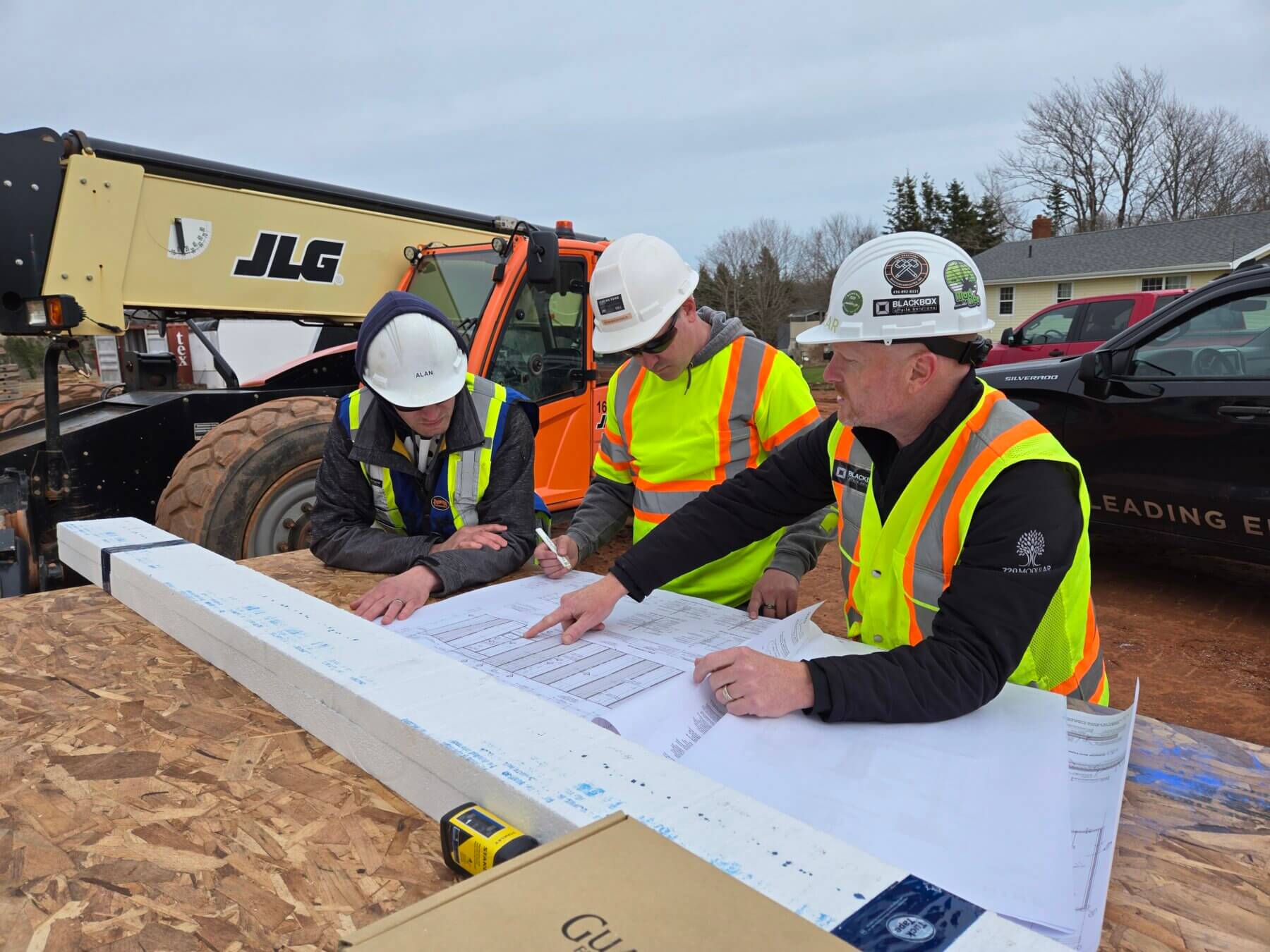
Conventional construction runs on a Design-Bid-Build model — design the project, go to market for bids, then build, phase-by-phase. It works when schedules are long enough to absorb the sequencing, but modular doesn’t have that luxury. In modular, the factory is building while the site is being prepared; the design has to be optimized for manufacturing realities before a shovel hits the ground. Every player needs to be selected and aligned well in advance. “Picking players the week before doesn’t work in modular,” Ferguson says. “And it never will.”
720 Modular operates on a Progressive Design-Build model — an approach to project delivery that prioritizes early team selection, compressed planning cycles, and deep collaboration before construction begins, and one that Ferguson argues is the only methodology that actually works for complex modular. It’s the process that prevents the breakdowns he sees most often in the industry: miscommunication between players, scope gaps, the dreaded “I thought you had that guy covered” moment that unravels what should have been a seamless build.
Being the quarterback also means carrying the liability. As the single-point solution, 720 Modular absorbs risk on behalf of owners, underwriters, and every player on the line. Ferguson is candid about what that’s meant in practice.
“We are trailblazing an industry,” he explains, “and in order to create believers, we have to sacrifice profit over certainty — for now.” The lessons learned have been hard-won, but the result is a track record that gives future clients something increasingly rare in complex construction: confidence in the outcome.
That confidence matters, particularly given one of the most persistent misconceptions 720 Modular encounters. Most people assume modular is cheaper. For single-family homes, that may hold in some contexts. For complex multi-storey, multi-unit buildings, it generally doesn’t. The gains in volumetric modular aren’t found in the line item — they’re found in speed and certainty. A faster delivery means quicker cash generation and lower financing costs. Budget certainty means owners don’t have to go back to their lenders with overruns. For the right project and the right owner, that trade-off is compelling. It just requires understanding what you’re actually buying.

What comes next for 720 Modular is, in some ways, an industry-wide challenge as much as a company one. Ferguson sees the path forward running through positive case studies and standardization — proof points that bring more owners and financial institutions into the modular pipeline early, which in turn drives capital investment in infrastructure, design process, and people, and eventually brings costs down.
“Build it right, make it pencil, and they will come,” he says.
Canada’s housing shortage is not going away, and the construction industry’s capacity to respond with conventional methods has its limits. 720 Modular’s bet is that volumetric modular — done properly, with the right team and the right quarterback — is part of what changes that. The strategy is set. Now it’s about running the play.