
Report: Alberta data centre boom could trigger trades shortage
The province accounts for 78% of Canada’s planned data centre developments and 92% of its proposed capacity.
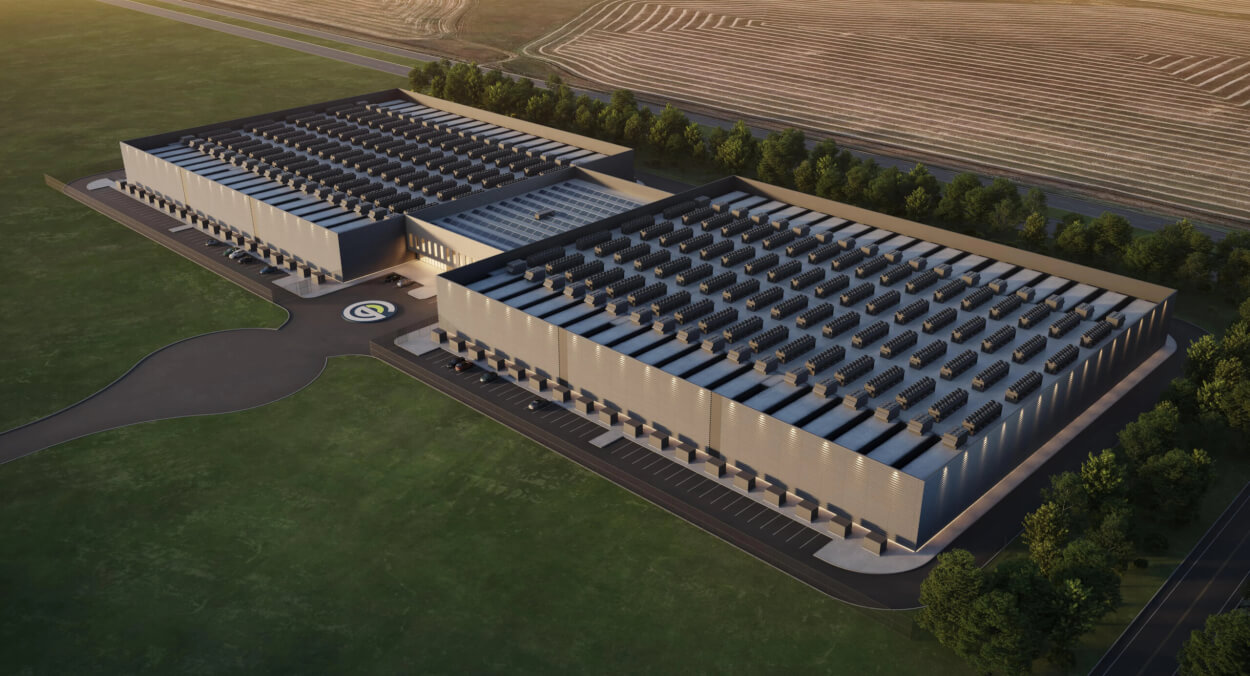
Key Takeaways:
- ICTC reports Alberta’s 12,618 MW AI data centre pipeline could cause a peak deficit of 8,000 to 17,000 construction and skilled trade workers under compressed five-year rollout schedules.
- Hyperscale facilities will compete directly against Alberta’s energy, housing, and healthcare sectors for in-demand electricians, pipefitters, and HVAC technicians.
- While Alberta boasts 260,000 skilled trades workers, 81% of data centre job postings specifying experience require prior mission-critical facility background.
The Whole Story:
A rapid wave of proposed artificial intelligence data centres could leave Alberta facing a deficit of up to 17,000 construction and skilled trade workers, threatening to escalate project costs and draw vital labour away from energy, housing, and public infrastructure projects.
According to a study by the Information and Communications Technology Council (ICTC), Alberta accounts for 78% of Canada’s planned data centre developments and 92% of its proposed capacity, anchored by an unprecedented 12,618-megawatt project pipeline. While the province holds distinct advantages—including natural gas reserves for private, behind-the-meter power generation, cooler weather, and a mature industrial workforce—the scale and timing of the proposed builds risk overwhelming local labour supply.
The report warns that concurrent construction schedules could create acute labour bottlenecks. Under ICTC’s labour market modeling, if 50% of the planned capacity moves forward over a compressed five-year rollout, Alberta could face a peak shortfall of more than 8,000 construction and skilled trade workers. If project approvals reach 80% over the same timeframe, that deficit could widen to approximately 17,000 workers.
Even over a more extended 10-year horizon, building 80% of proposed capacity would still generate a net deficit of 5,208 construction and skilled trade workers during peak building, alongside an operational deficit of 2,227 full-time technical personnel once online.
“Electricians, pipefitters, HVAC technicians, engineers, construction managers, and other workers needed by data centres are also required for energy projects, housing, utilities, hospitals, public transit, and other major infrastructure,” wrote Anne Patterson, Chief Research and Communications Officer at ICTC. “There is no large reserve of experienced workers waiting to be hired if several major projects begin at once.”
The study notes that a single 400-megawatt hyperscale facility can require roughly 1,800 workers at peak construction, including 1,000 to 1,100 electricians and 350 to 400 mechanical workers. Key technical trades in Alberta already experience low unemployment rates. After accounting for competing commercial demand from the province’s existing infrastructure pipeline, the net available pool of unallocated construction-phase labour across the province sits at just 6,905 workers.
Furthermore, BuildForce Canada forecasts that Alberta will need to recruit 59,000 construction workers over the next decade—primarily to replace 43,400 retiring tradespeople—leaving an anticipated provincial deficit of 15,400 workers even before factoring in hyperscale data centre demand.
Industry participants interviewed for the report warned of an emerging talent “tug-of-war” between tech developers and Alberta’s oil and gas sector. Both sectors compete directly for identical skill sets, including industrial electricians, pipefitters, and HVAC technicians. Unchecked competition could trigger localized wage inflation, project delays, and higher building costs for other infrastructure developments.
Beyond headcounts, the report identifies a major domain-knowledge gap. An analysis of more than 4,800 Canadian data centre job postings found that 81% of postings that specified experience required at least two years, while 39% required six or more years. Because large-scale AI data centres are relatively new to the region, few local tradespeople and technicians have direct experience with high-density cooling, operational technology cybersecurity, and mission-critical power redundancy systems.
To mitigate these risks, ICTC recommends establishing an Alberta AI data centre workforce observatory to track occupational demand, expanding work-integrated learning and apprenticeships, and accelerating industry-aligned credentialing at polytechnics such as SAIT and NAIT. The report also highlights the need to build formal workforce development and equity ownership pathways with Indigenous communities to sustainably expand Alberta’s talent and supplier base.