
Ontario Line has major breakthrough
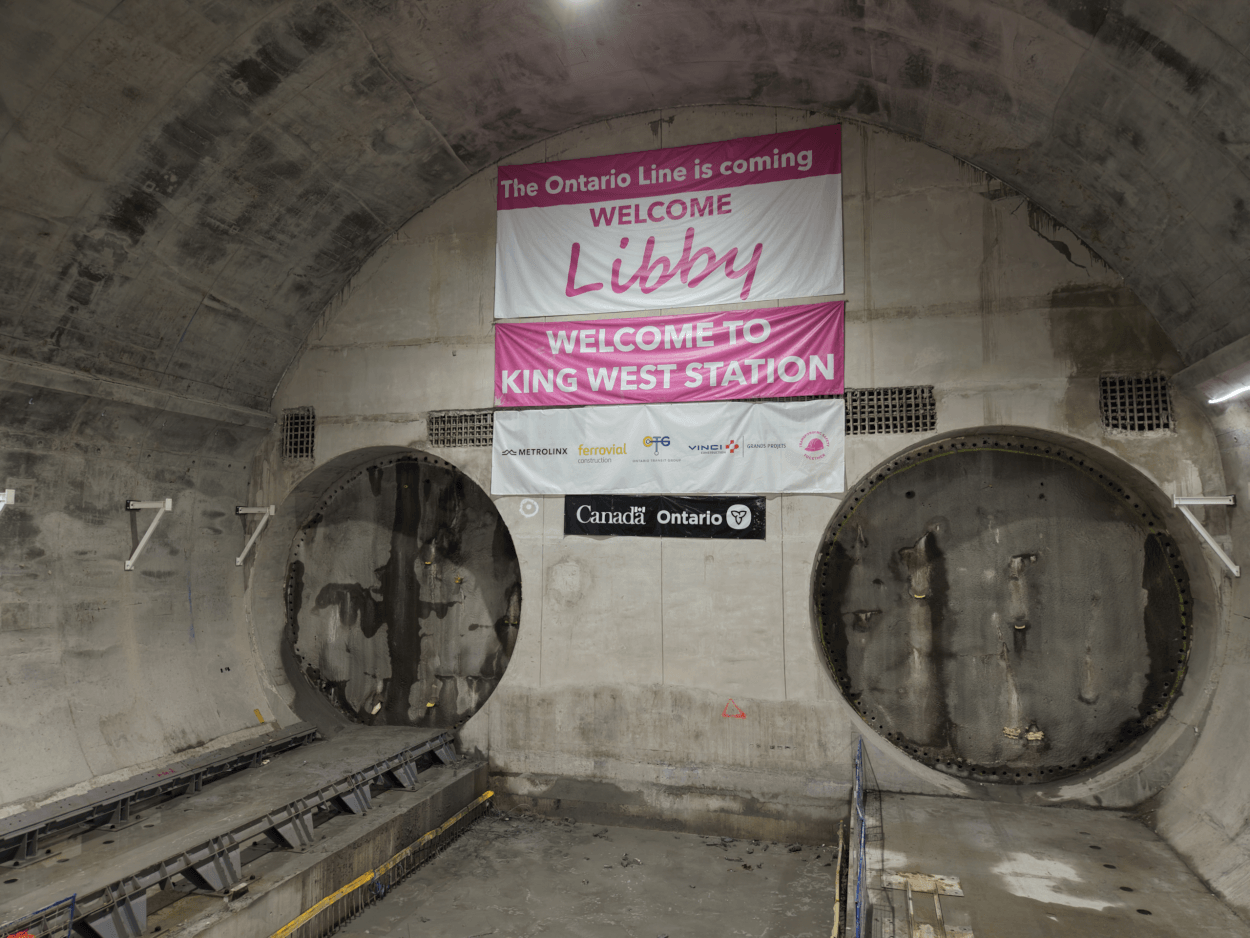
The project’s first tunnel boring machine arrived at the future King West Station site.
Key Takeaways:
- The first Ontario Line tunnel boring machine, Libby, completed its 1.3-kilometre drive to break into the future King West Station site at King and Bathurst streets.
- A companion boring machine, Corkie, will launch along the parallel westbound tunnel alignment in December.
- The 15.6-kilometre, 15-station transit line is backed by over $4 billion in federal contributions and is projected to support nearly 390,000 daily boardings.
The Whole Story:
Construction on Toronto’s Ontario Line has achieved a key subterranean milestone as the project’s first tunnel boring machine (TBM) broke through the headwall into the future King West Station site, marking the first time a boring unit has reached a station along the planned subway route.
The machine, nicknamed Libby, launched in April 2026 from a portal east of Exhibition Station. Over the past seven months, it has excavated approximately 1.3 kilometres of the eastbound tube while installing 780 precast concrete tunnel lining rings. Following routine maintenance and technical inspections at the King and Bathurst streets site, Libby will resume boring eastbound toward the future Chinatown Station, while a second TBM, dubbed Corkie, is scheduled to arrive in December to dig the parallel westbound tunnel.
Located at the intersection of King Street West and Bathurst Street in Toronto’s Fashion District, the underground station will place an estimated 27,000 residents and 24,200 jobs within walking distance of high-order transit. Station designs are projected to handle 5,100 boarding and arriving passengers during peak hours, alongside 2,400 transfers with connecting routes, including direct links to the TTC’s 504 King and 511 Bathurst streetcars.
Gregor Robertson, federal Minister of Housing and Infrastructure, said the breakthrough demonstrates tangible delivery on the city’s largest transit build in decades. Ontario Transportation Minister Prabmeet Sarkaria added that expanding rapid transit across the corridor will curb commuter road congestion while reducing peak travel times across Toronto by up to 40 minutes.
The 15.6-kilometre line will link Exhibition Place in the southwest to the Eglinton Crosstown LRT at Don Mills Road, comprising 15 stations and more than 40 transit connections. Metrolinx is directing construction on behalf of the Ontario government, backed by more than $4 billion in direct federal capital—the largest single public transit funding allocation Ottawa has committed to Toronto. During peak operations, the new route is forecasted to reduce passenger crowding by up to 15% on the busiest central segment of Line 1 between Bloor-Yonge and Wellesley stations.