
Ontario breaks ground on first Ring of Fire road project
The 107-kilometre road will connect the Webequie First Nation to future mining zones.
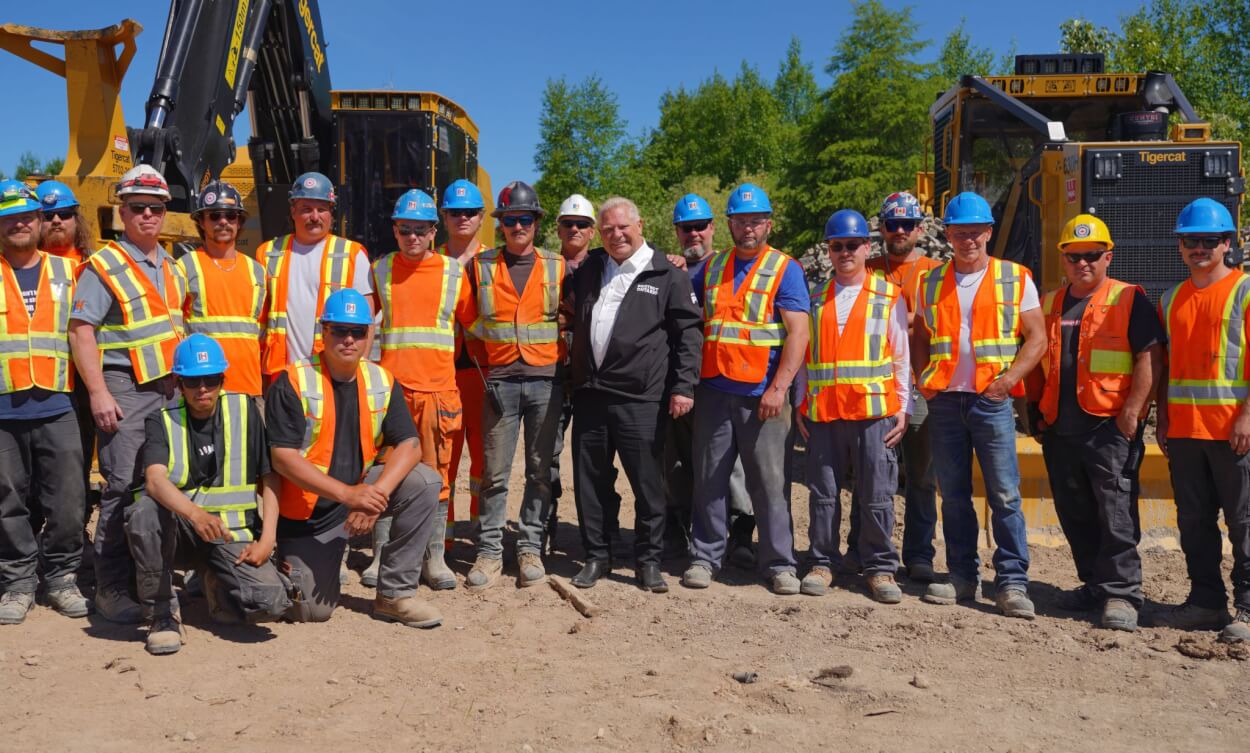
Key Takeaways:
- Ontario and Webequie First Nation have officially started construction on the 107-kilometre Webequie Supply Road.
- The multi-year project requires building six bridges, 25 culverts, and a permanent maintenance facility to handle heavy industrial traffic.
- The road is expected to open by November 2030, advancing the integration of the remote Ring of Fire mining sector by four years.
The Whole Story
Premier Doug Ford joined Webequie First Nation Chief Lorraine Whitehead and provincial cabinet ministers this month to celebrate the official start of construction on the Webequie Supply Road. The milestone marks a major step forward in the province’s accelerated infrastructure strategy, which aims to complete a 500-kilometre all-season road network into the mineral-rich Ring of Fire region five years ahead of schedule.
The newly launched project entails building a 107-kilometre all-season corridor connecting the remote Webequie First Nation community directly to future mining zones. The construction footprint is highly complex, requiring 31 water crossings—consisting of six full-scale bridges and 25 structural culverts—alongside localized aggregate extraction sites and a dedicated maintenance facility. The road is slated to open by November 2030, a timeline that is four years ahead of its original target.
The project follows a decade of negotiations and builds on a series of economic agreements, including the Community Partnership Agreement signed in October 2025 and the Joint Statements of Economic Partnership finalized in March 2026. To support broader Indigenous equity, ownership, and direct partnership in these regional critical mineral projects, Ontario is deploying nearly $3.1 billion through a tailored mix of loans, grants, and scholarships. The province has also launched a $500 million Critical Minerals Processing Fund to anchor down-stream industrial infrastructure.
Unlocking the 8,000-square-kilometre Ring of Fire region—located roughly 500 kilometres northeast of Thunder Bay—is a long-term economic priority for the province. The region contains rich deposits of critical minerals required for electric vehicles, batteries, and advanced manufacturing. Over the next 30 years, full development of the corridor is projected to create more than 70,000 jobs and inject $22 billion into Ontario’s economy.
“Ontario’s Ring of Fire is a once-in-a-generation opportunity to create 70,000 good-paying jobs, access the critical minerals the world wants to buy, and add $22 billion to our provincial economy,” said Premier Doug Ford, emphasizing that the province is pursuing true economic reconciliation by advancing the work in full structural partnership with First Nations. Chief Lorraine Whitehead and provincial ministers noted that the corridor will permanently replace unstable winter ice roads, establishing reliable, year-round access to medical services, social programming, and commercial goods for remote community members.
The Ring of Fire Accelerated Road Network
The approval of the Webequie-led Environmental Assessment serves as the anchor for an expedited, multi-phase northern transit network:
- Geraldton Main Street Rehabilitation: Construction began on June 2, 2026, on this $81.3 million project in Greenstone, which serves as the southern highway gateway to the corridor.
- Webequie Supply Road: Construction is now officially underway on the 107-kilometre road, with an accelerated opening target of November 2030.
- Anaconda and Painter Lake Road Upgrades: Refurbishments to these existing industrial paths are scheduled to open by November 2030, two years ahead of schedule.
- Marten Falls Community Access Road: Major construction is scheduled to begin in August 2026, with an opening target of November 2031.
- Northern Road Link: Shovels are expected in the ground by Spring 2028, with the final connection opening by November 2031 to complete the contiguous network.