First look: Alberta First Nations art museum unveils design
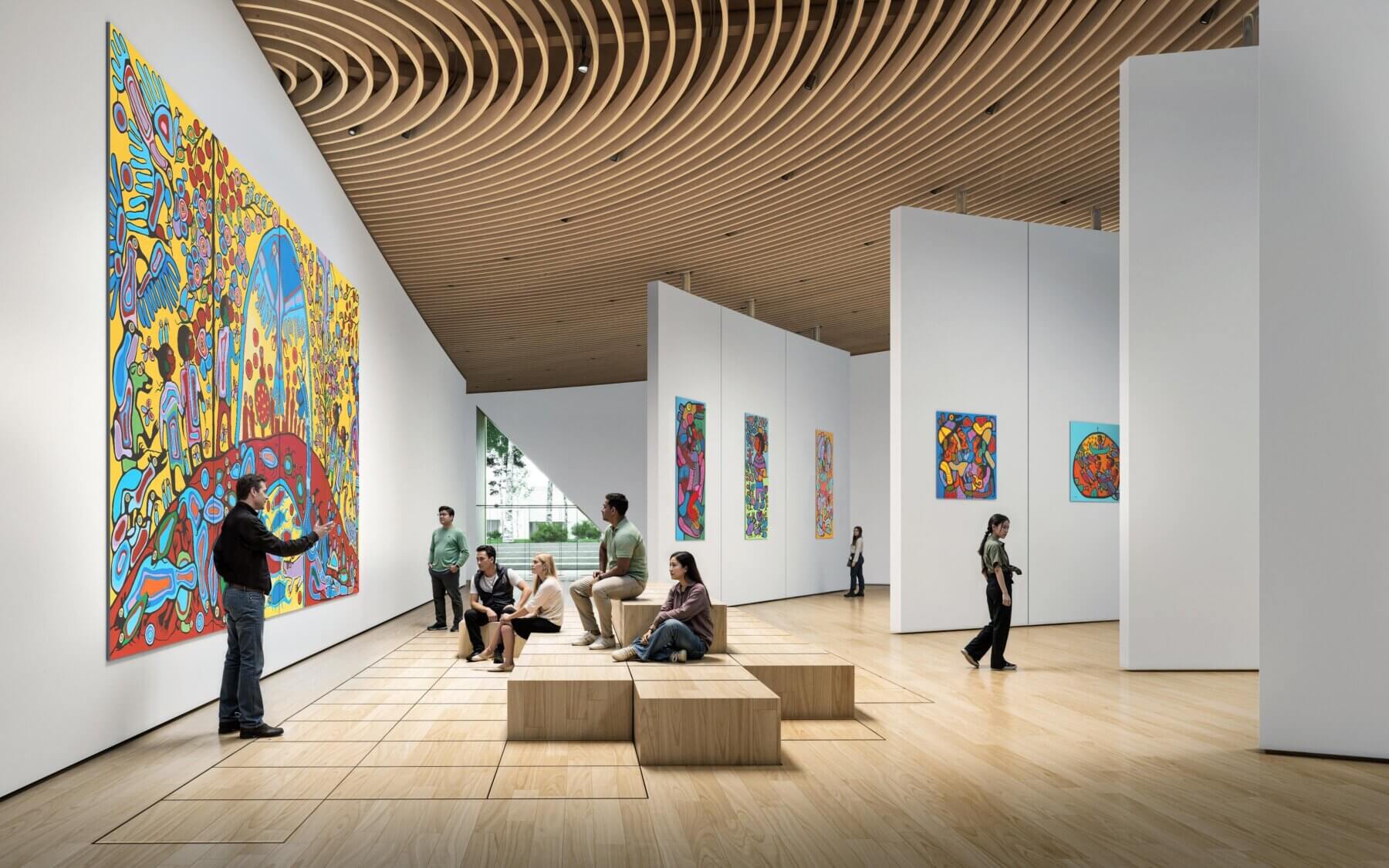
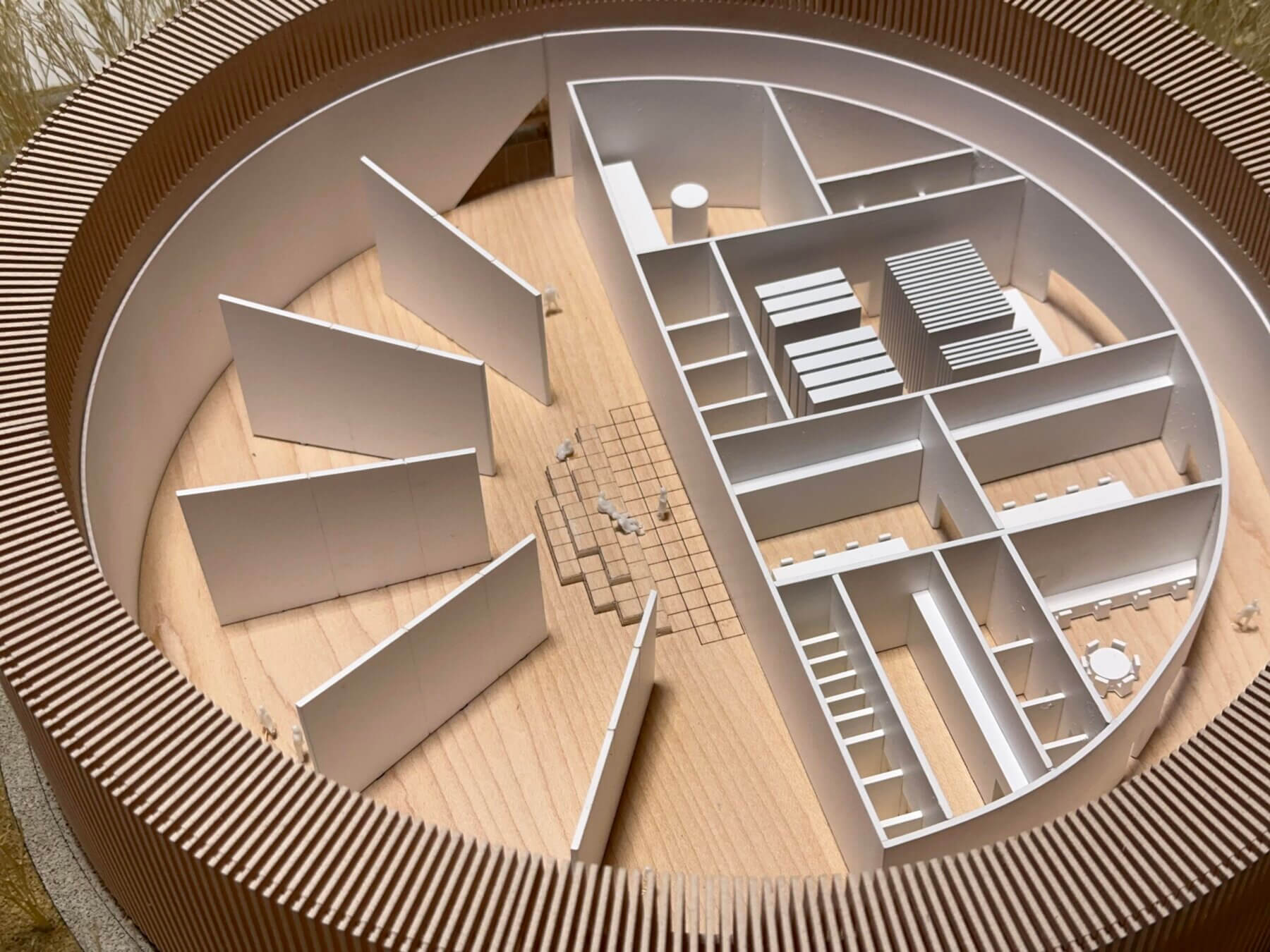
The institution’s interior utilizes central rotating walls and a retractable platform floor system.
Key Takeaways:
- SPECTACLE Bureau for Architecture and Urbanism has unveiled the design for the Museum of Aboriginal Peoples’ Art and Artifacts at Portage College in Lac La Biche, Alberta.
- The mass-timber building features a kinetic wooden veil, a rooftop ceremonial garden, seven elliptical landscape paths honoring PNIAI founders, and a fireproof storage vault designed to survive severe wildfires.
- Designed around flexible rotating walls rather than traditional gallery spaces, the facility holds the world’s largest collection of art from the Professional Native Indian Artists Inc. collective.
The Whole Story:
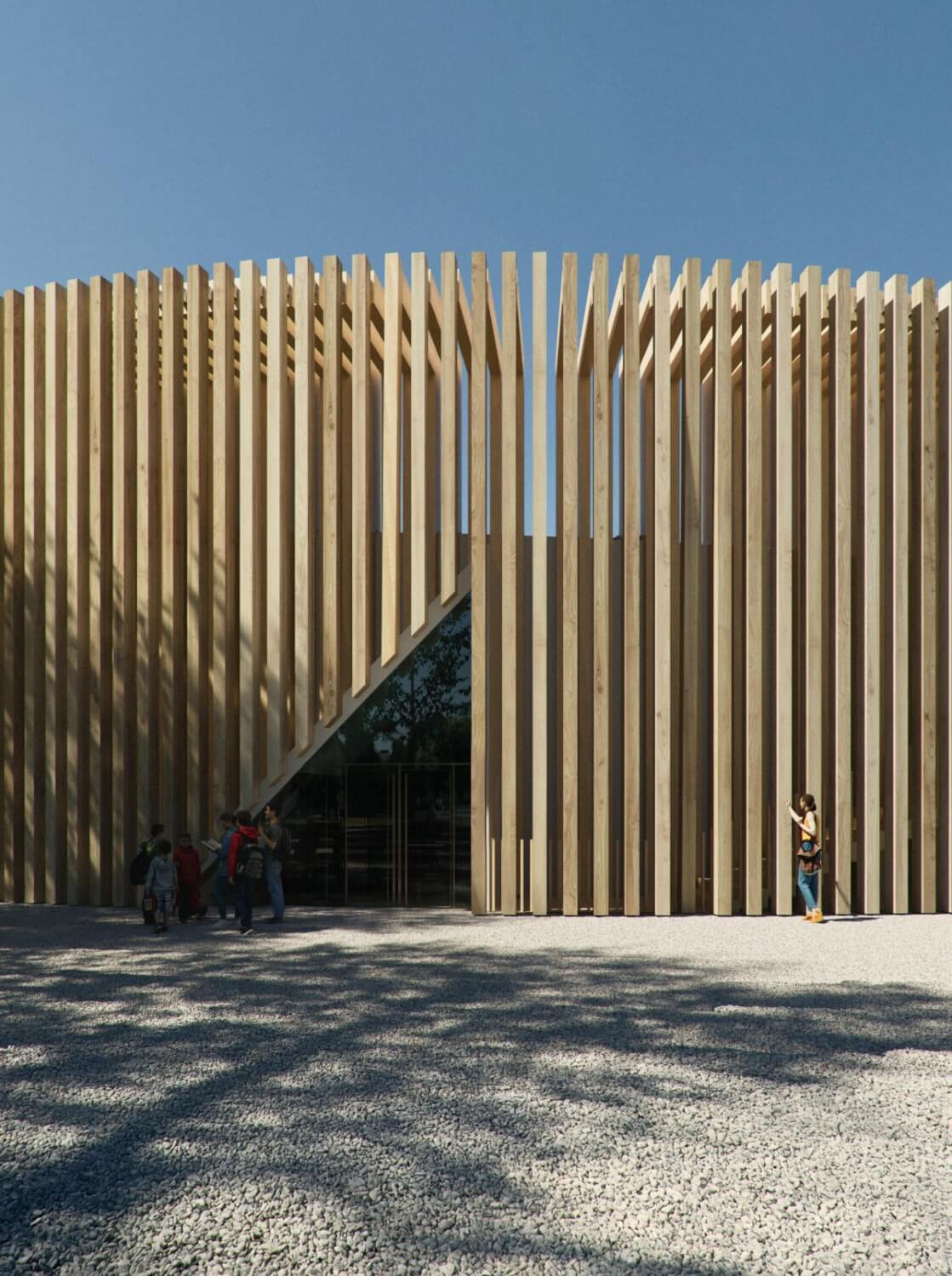
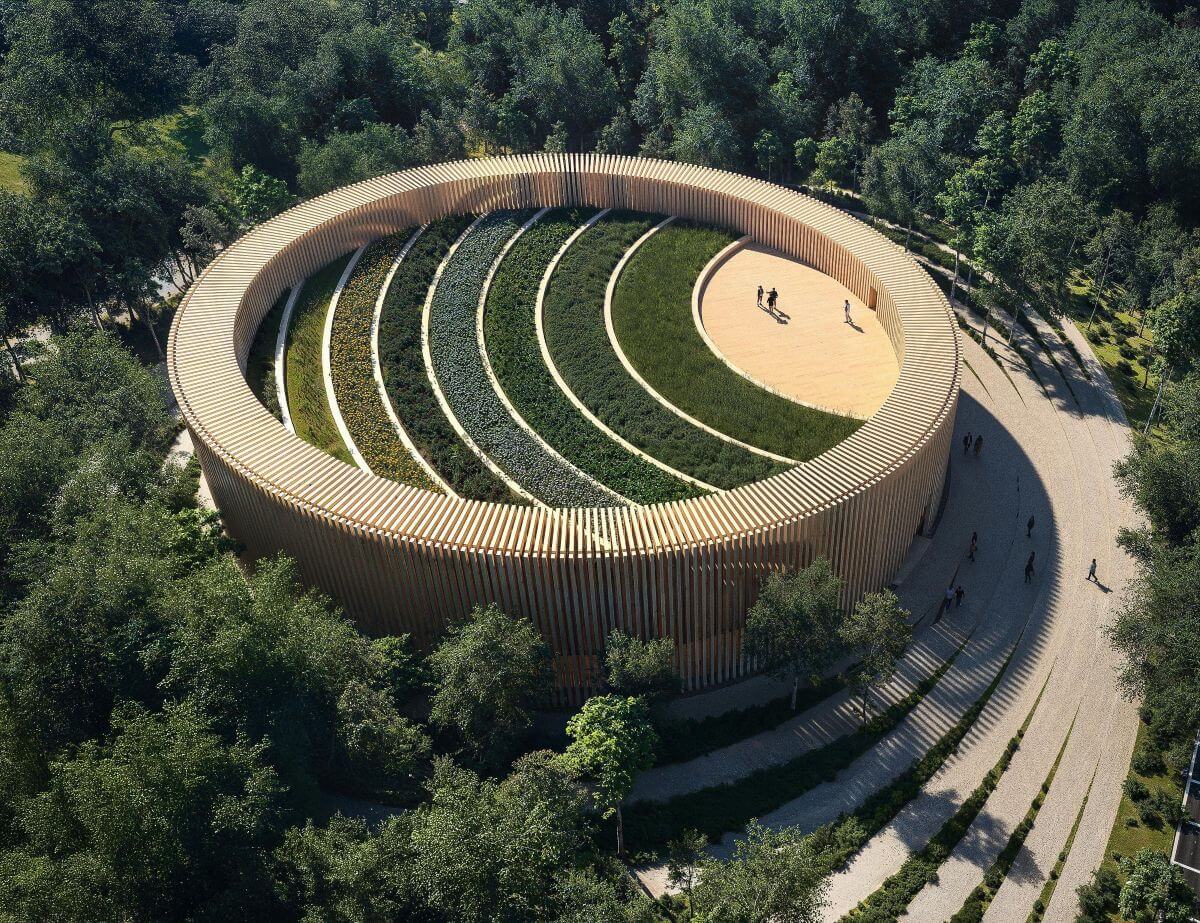
Architectural firm SPECTACLE Bureau for Architecture and Urbanism Inc. has unveiled a striking circular design for the new Museum of Aboriginal Peoples’ Art and Artifacts (MOAPAA) at Portage College in Lac La Biche, Alberta.
Located on Treaty 6 territory and the Métis homelands, the landmark institution will house the world’s most extensive collection of works by the Professional Native Indian Artists Inc. (PNIAI), the influential First Nations artistic collective founded in Winnipeg in 1973.
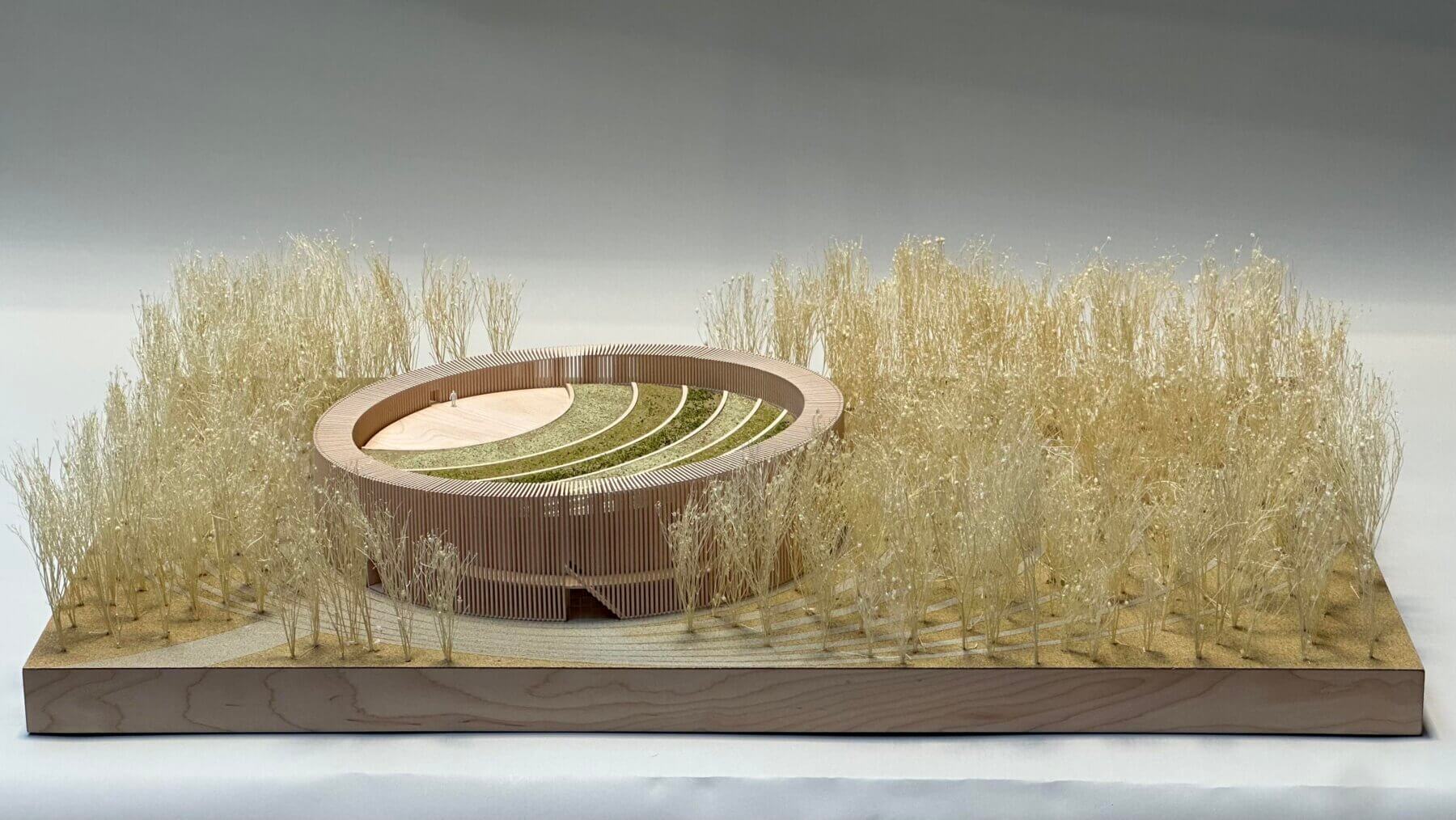
The building’s landscape and exterior are structured as a narrative journey centered on the seven original members of the PNIAI: Jackson Beardy, Eddy Cobiness, Alex Janvier, Norval Morrisseau, Daphne Odjig, Carl Ray, and Joseph M. Sánchez. Seven nested elliptical pathways wind around the museum, converging at public assembly areas on the east entrance and a west sculpture garden. The site will be reforested with Trembling Aspen trees, complemented by a kinetic exterior wood veil featuring vertical hinged slats that sway in the wind. A sloping outdoor ramp leads visitors to a rooftop prairie meadow planted with ceremonial and healing flora, including sage and sweetgrass, alongside a 60-person wooden gathering deck.
Moving away from traditional “white box” gallery layouts, the interior utilizes central rotating walls and a retractable platform floor system that can convert between a raked auditorium, bench seating, sculptural display plinths, or flush floor space. Built primarily with locally sourced mass timber, the facility integrates ground-source heat exchangers, heat recovery systems, and full electrification. To protect the collection against regional wildfire risks, the central storage vault is engineered to withstand a catastrophic forest fire even if the surrounding superstructure is compromised.
“As a curator, I view art and life as beyond the lens of champagne receptions and white box museums in concrete and steel towers,” said Joseph M. Sánchez, PNIAI Founding Member and Chief Museum Curator of the MOAPAA. “Ideas of commercial success are exchanged for truthful dialogue. Art is not an object. Great art seeks spiritual communication.”
Portage College Elder Ruby Sweetman noted the institutional impact of the expansion, stating, “This free-standing museum adds to the Indigenous artistry already on display in the hallways of Portage College. I think more exposure will only draw more inspiration and more education about Indigenous arts and culture.” The Indigenous-led project previously won a 2025 Canadian Architect Award of Excellence following its design collaboration between SPECTACLE, Sánchez, Sweetman, and Museum Director Donna Feledichuk.
More photos: