Field Notes: Province House links PEI’s past with its future
The 12-year project saw hidden treasure, high-tech upgrades and historic craftsmanship.
Key Takeaways:
- The $138 million, 12-year restoration of Canada’s second-oldest seat of government (built in 1847) is wrapping up this November.
- The work blended traditional craftsmanship with modern geothermal heating, district energy, and real-time IoT humidity sensors.
- Crews discovered historical finds, including architect Isaac Smith’s signature, an undocumented stone chamber, and antique sherry bottles beneath the floorboards.
The Whole Story:
After more than 170 years of continuous use, Prince Edward Island’s Province House needed a break.
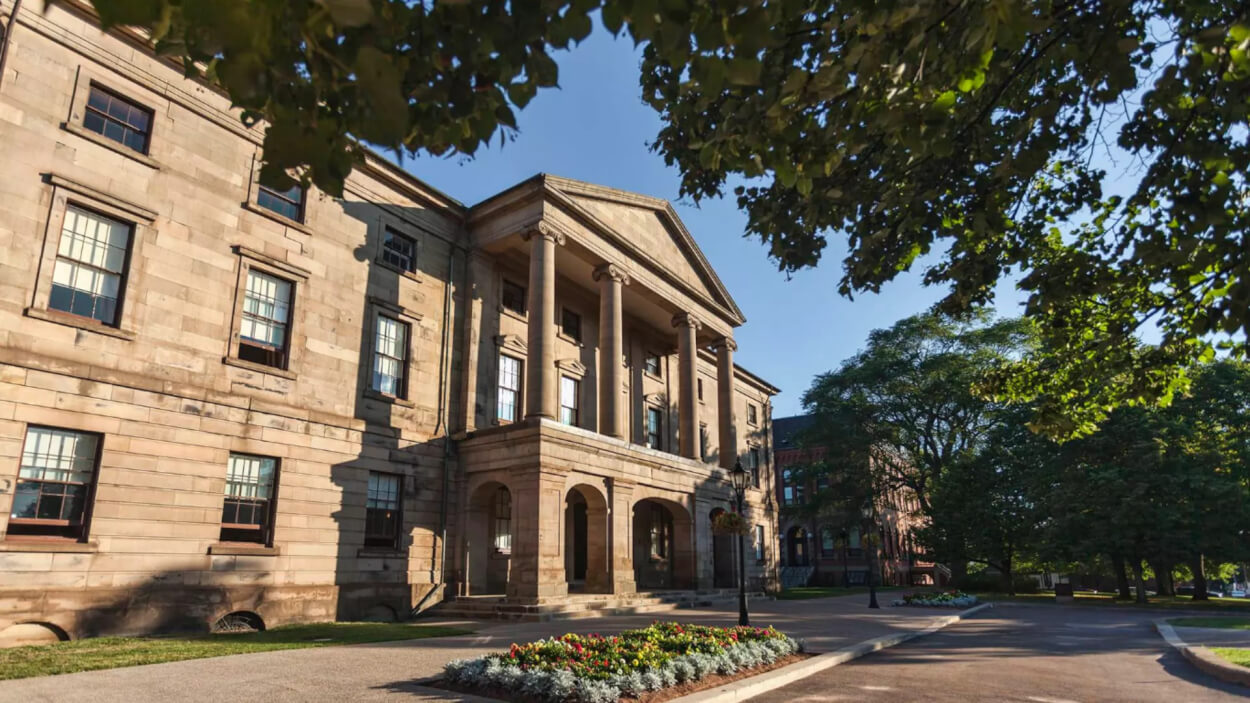
It’s where PEI’s Legislature has met since 1847. The building, located at the intersection of Richmond and Great George Streets in Charlottetown, is Canada’s second-oldest seat of government.
The first cornerstone was laid in 1843 and work was completed in 1847. It carried a final price tag of £10,000 (pounds sterling). This would be roughly $2.5 million in today’s money and was a massive sum at the time.
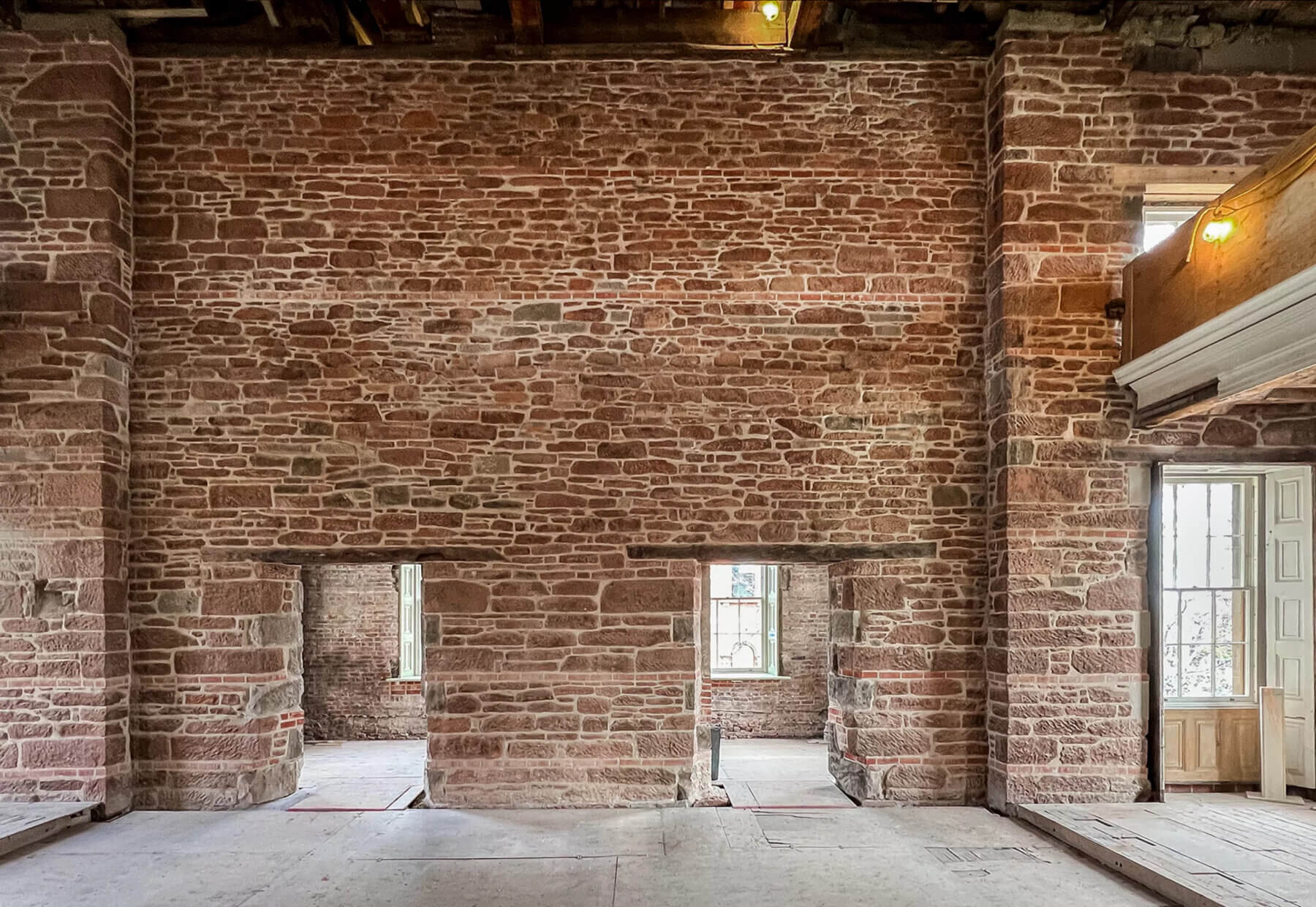
In 2014, officials determined it required major conservation work to address deteriorating sandstone, aging building systems, moisture infiltration, and accessibility limitations. Plans were formed to preserve the building’s historic character while ensuring it remains safe, functional, and sustainable for future generations.
Those decades of history didn’t make the work any easier.
“Working on a building from the 1840s presented many challenges, including hidden structural issues, deteriorated masonry, and aging infrastructure,” said Ryan McGuire, Senior Project Manager, Public Services and Procurement Canada. “Work had to carefully balance heritage conservation requirements with modern building standards while protecting historic materials and spaces.”
Pomerleau led the primary phase alongside structural engineers Blackwell Engineering and lead architects DFS Inc., overseeing complex structural stabilization, modern mechanical integrations, and geothermal well installations.
They were supported by niche sub-contractors and institutions—including PCL for earlier phase conservation, RJW Stonemasons for sandstone exterior repairs, Heritage Grade for traditional interior lime-and-lath plasterwork, Holland College’s Heritage Retrofit Carpentry program for window conservation, and GSM Project for heritage exhibit design.
The project included comprehensive upgrades to the building’s mechanical and electrical infrastructure. This includes tying Province House into the central district heating system, installing new geothermal well systems, and upgrading HVAC and electrical distribution systems to improve performance, efficiency, and long-term resilience. Information technology and security systems were also modernized.
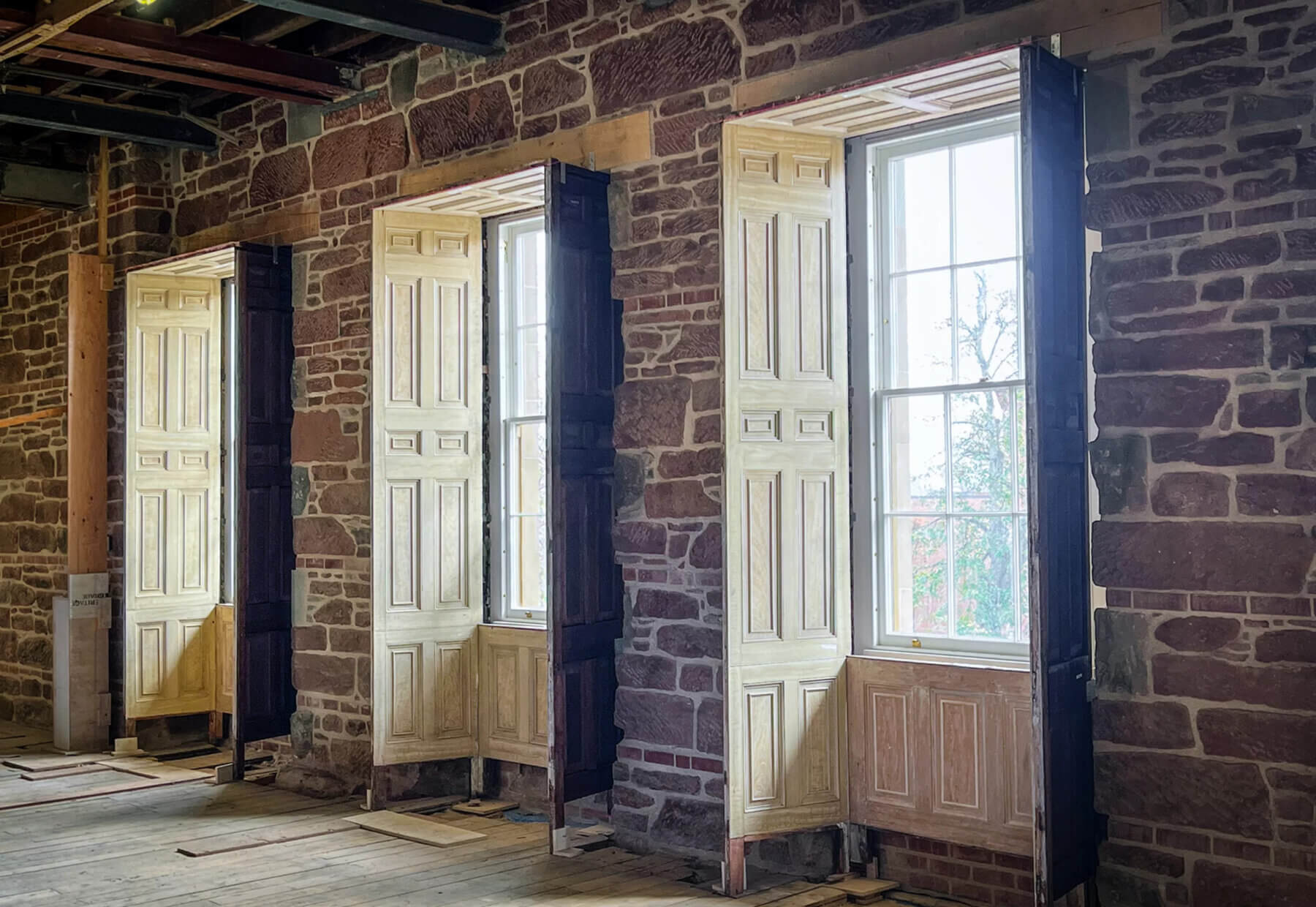
Significant attention was also given to heritage finishes. Wall and ceiling finishes were carefully restored, while historic architectural elements are repaired or replicated using traditional techniques.
IoT sensors were installed to monitor humidity and temperature in real time, which is essential in a heritage environment. Maintaining relative humidity below 60% is critical to preserving historic materials such as wood, plaster, and stone.
MacGuire explained that historic buildings require a deep understanding of both their physical condition and historical significance. Because original materials are often irreplaceable, the focus is on repair rather than replacement. He noted that efforts were made to adapt to unexpected conditions while ensuring all work respects the building’s heritage value.
Because Province House is both a National Historic Site and an active legislative building, every intervention required careful consideration. Detailed condition assessments, conservation planning, archaeological investigations, and heritage reviews were completed before major work began.
“Original materials were retained and repaired wherever possible, while upgrades to accessibility, safety, building systems, and visitor experience were integrated in ways that respected the building’s historic character,” said McGuire. “The result is a building that preserves its heritage significance while meeting modern needs.
The work has required specialists in heritage conservation, architecture, engineering, archaeology, and traditional building techniques. Heritage masons, conservators, historians, plaster specialists, woodworkers, and engineers all play key roles.
To ensure historical accuracy during the upgrades, crews utilized archival research, historic photographs, original construction details, material investigations. Specialists studied original finishes, colours, and lighting elements to ensure restoration work reflected the building’s historic appearance as closely as possible.
One notable example was the hand carving of a replacement South Portico capital stone, which required around 400 hours of skilled craftsmanship. For the exterior alone, the team had to replace nearly 1,600 stones.
Prince Edward Island itself presents unique construction and conservation challenges. McGuire explained that Iiron-rich soils, sandstone geology, limited bedrock, and a coastal climate create concerns around foundations, drainage, moisture, and freeze-thaw cycles. These conditions make careful masonry conservation and material selection especially important.
Construction hasn’t been without its surprises. Crews uncovered hidden structural issues as well as fascinating historical finds, including architect Isaac Smith’s signature, a previously undocumented stone chamber, a carved face hidden within a sandstone block, and historic sherry bottles beneath the Legislative Assembly floor.
After 12 years of work and a $138 million price tag, the project team is nearly ready to reveal the results. Legislators are expecte to finally return to the facility in November.
“The project revealed the remarkable skill of the original builders and deepened the understanding and appreciation for traditional stone masonry, timber construction, plasterwork, and decorative finishes,” said McGuire. “It also highlighted the importance of specialized heritage trades that combine historic techniques with modern conservation practices.”