
Canada backs $70B clean energy construction program
Combined, the projects represent the largest investment in clean energy in North American history.
Key Takeaways:
- The Canadian government, alongside Hydro-Québec and Newfoundland and Labrador Hydro, is backing a $70 billion mega-project program.
- A new Definitive Cooperation and Implementation Agreement (DCIA) between Hydro-Québec and Newfoundland and Labrador Hydro replaces the longstanding 1969 Churchill Falls contract.
- A core focus of the program is unlocking the Labrador Trough’s economic potential. Upgrades like the new Labrador West transmission line and a $20 million feasibility investment via the First and Last Mile Fund will supply needed power to expand high-purity iron ore and critical mineral mining required for low-carbon supply chains.
The Whole Story:
The government of Canada has announced its support for a $70 billion green energy construction project program in eastern Canada, the largest investment in clean energy in North American history.
Officials unveiled a package that includes up to $10 billion in federal financial support and investments to expand clean electricity generation and transmission in Labrador through upgrades to Churchill Falls, development of the Gull Island hydroelectric project, and enabling infrastructure needed to support critical minerals development in the Labrador Trough.
As part of this agreement, the federal government will guarantee the financing to develop the massive and long-discussed Gull Island power project.
Enabled by a landmark Definitive Cooperation and Implementation Agreement (DCIA) signed between Hydro-Québec and Newfoundland and Labrador Hydro, these combined construction projects – valued at nearly $70 billion – represent the largest clean energy investment in North American history. They are expected to create thousands of jobs and economic prosperity for the region, including the Innu Nation of Labrador.
Canada is also announcing the referral of the ‘Labrador Trough Clean Power, Critical Minerals and Infrastructure Corridor’ to the Major Projects Office (MPO) for coordinated federal review.
The Labrador Trough is a massive geological belt and mining region, stretching approximately 1,100 kilometres across Labrador and Quebec. Having produced more than 2 billion tonnes of iron ore over the past half-century, the region remains one of Canada’s most significant sources of high-purity iron ore and a strategic asset for low-carbon steel supply chains.
Since 2025, 18 major projects, including 5 mining projects and 8 energy projects, have been referred to the Major Projects Office.
Canada is also making a federal investment of nearly $20 million to support feasibility work for mining-enabling infrastructure through the First and Last Mile Fund (FLMF). Together, these measures will help meet Canadian industry’s growing energy needs, accelerate responsible resource development and unlock new opportunities for workers, communities, and Indigenous partners across Labrador and the country.
Newfoundland and Labrador Hydro and Hydro Québec have signed the historic Definitive Cooperation and Implementation Agreement to terminate and replace the 1969 Churchill Falls Contract and develop Gull Island and expand capacity of the Churchill Falls Generating Station. The additional power will secure the future growth of Québec’s energy-intensive industries and competitiveness, while in Newfoundland and Labrador, it will accelerate economic growth in a strategic mining region and support Labrador communities that need power to deliver critical services to a growing population.
Projects included in the annoucement:
Churchill Falls upgrades: Expand and extend the lifetime of the existing Churchill Falls strategic electricity generation facility. Upgrades will be made to the 11 turbine units (with one turbine expected to come online each year) at the existing Churchill Falls hydroelectric facility in Labrador to increase capacity by 1,275 megawatts (MW), a 30% efficiency increase for existing turbines. The Churchill Falls expansion will increase capacity by up to 2,500 MW.
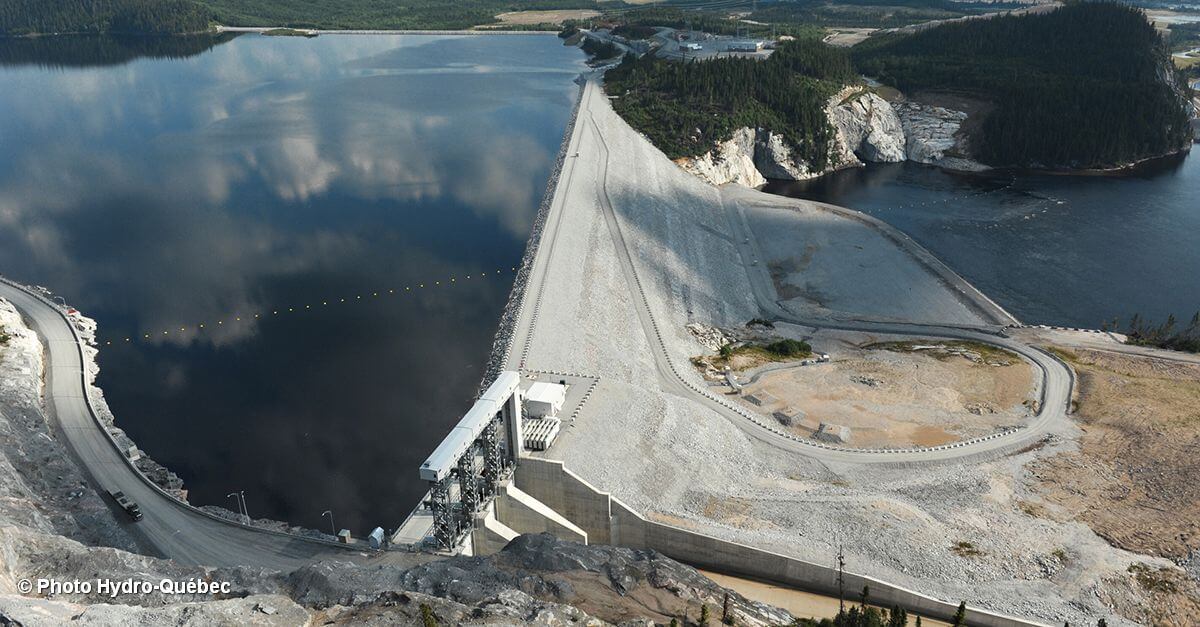
Gull Island: Construction of a new 2,700 MW hydroelectric facility located on Churchill River between Churchill Falls and Muskrat Falls. The project is expected to be online between 2036-2037 and is expected to produce about 12 TWh in power which will substantially increase reliable electricity supply for Atlantic Canada and Central Canada. It will also facilitate industrial development and the buildout of more variable renewables in the region, including in neighboring provinces. Gull Island underwent a federal environmental assessment in 2012 as part of the Lower Churchill Hydro Electric Generation Project.
Transmission for Churchill River projects: Construction of transmission lines (660km+) and power infrastructure to enable Churchill Falls and Gull Island to deliver electricity to the Quebec border.
Labrador West Transmission: Construction of a new 735kV transmission line from Churchill Falls to Labrador City to provide new power to the region to serve homes and enable industrial load growth and increased critical minerals development. The existing transmission line serving Labrador City and Wabush / Labrador Trough region are running at maximum capacity. As such, a new transmission line is required to support population growth and to enable new resource development that could create hundreds of new full-time mining jobs and meaningful partnership opportunities with Indigenous groups.
Onshore Wind: Proposed development of 2,000 MW of onshore wind in Labrador, with location and other details under consideration by Newfoundland and Labrador Hydro.