
Built for the long haul: How Black & McDonald and Willow Cree grew a partnership beyond the project
Willow Cree Project Services was named to show two organizations operating as one, and each brings something unique to the partnership.

If Willow Cree Development Corporation had signed with every company that knocked on its door, it would have more than 100 partners, says company President and CEO Dennis Esperance.
In reality, it has 13.
Black & McDonald is one of them. Chris Plested, general manager of Western Industrial, made the company’s first call to the band office, and the partnership that ultimately formed — Willow Cree Project Services — is now entering its third year.
Joel Goy, Black & McDonald’s Saskatchewan Industrial Division Manager, has seen how carefully Willow Cree approaches its partnerships. This one took about two years to formalize. “They don’t want to just jump into any partnership,” he said. “They want to make sure it’s the right fit for everybody.” And he’s heard them put it another way: “First you date. Then you get married.”
Esperance has good reasons for moving carefully. Before he took the helm at Willow Cree, the business arm of Beardy’s & Okemasis Cree Nation, his career in supply chain and procurement spanned some 30 years. He saw plenty of one-off partnerships signed between companies and First Nations for a quick cash grab, with companies using them as a foot in the door.
Willow Cree receives no government funding and has to generate its own revenue, but Esperance describes it as a community-driven development corporation: everything it does is weighed by how it will benefit the Nation and the community.
To make the list, a partner needs capacity Willow Cree doesn’t already have, alongside values that align, and — importantly — a commitment to the long haul.
“They have to want to be with us for the right reasons,” Esperance said. The most important test goes beyond a given project’s groundbreaking; it’s whether a partner shows up in the community: at powwows, sports days, and fundraisers, for example.
Through Black & McDonald’s partnership with Willow Cree, Goy has been part of “showing up” in action. Over the past year, he has attended the Nation’s powwow, walked in the Grand Entry at the Nation’s invitation, and has spoken with youth at career fairs.
“The community is genuinely excited and enthusiastic about us participating in these events” Goy said.
Plested has noticed the same warmth. “These guys have become friends,” he said. “We get together once a month, and we go for lunch; we hang out and we laugh. They really like to have fun.”
Willow Cree Project Services was named to show two organizations operating as one, and each brings something unique to the partnership. As Black & McDonald offers that aforementioned capacity, Willow Cree opens doors through the industry connections Esperance has built over his career, and he guides what the partnership commits to when it bids. He makes sure the socioeconomic targets in a proposal are ones the team can actually reach — because a bid that pledges a 25% Indigenous workforce and then reaches, say, 10 or 12%, he explained, could get the partnership disqualified.
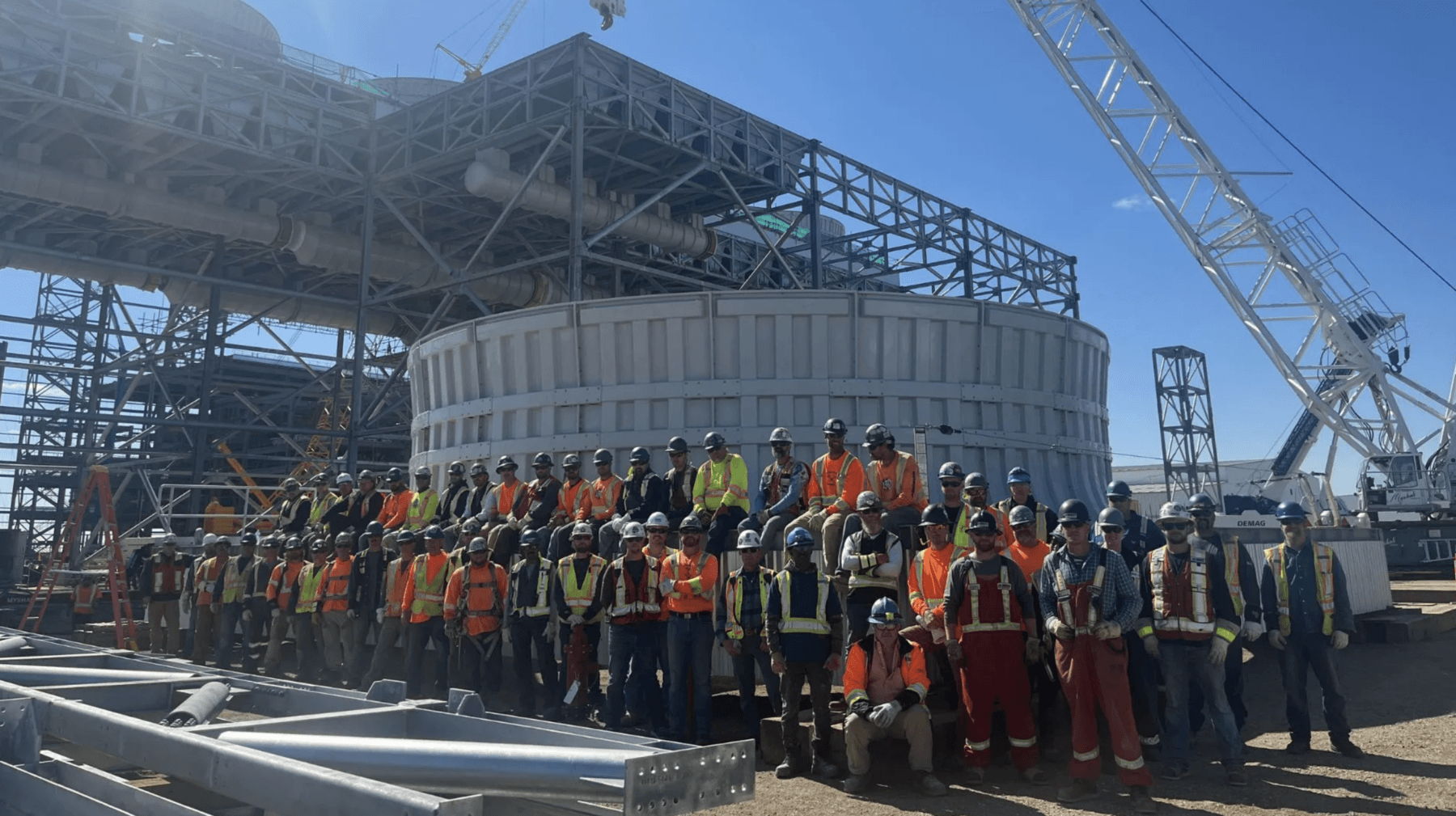
Willow Cree Project Services holds the contract for Black & McDonald’s work at SaskPower’s Aspen Power Station, the project the company profiled this summer. More work with SaskPower has followed.
In terms of process, Black & McDonald aims to bring Willow Cree’s team in early, at the business development stage, and keep them involved through negotiations. For Esperance, working that closely depends on shared values: when they align, he said, it “enables us to really learn from one another.”
And not every conversation has been easy. When a slate of upcoming work raised questions about which partner was best placed to take it on, the Black & McDonald team brought its case to Esperance, prepared for a challenging conversation. But it turned out to be much simpler than they thought. Through open communication, Plested said, they reached a resolution “that everybody could be happy with.”
Goy has noticed something specific about how Esperance’s team approaches those moments: they weigh what’s best for everyone involved, from the Nation and its people to the partnership itself. He said it’s refreshing to know such conversations are “going to lead to something that’s best for everybody.”
The relationship has also shaped how Black & McDonald works. For this year’s National Day for Truth and Reconciliation, the team asked council members at Beardy’s & Okemasis Cree Nation to recommend an artist to design the company’s orange shirts. They were introduced to Hal Cameron, who works at a Métis-owned print shop that went on to produce them. Cameron’s design begins with a little girl in black silhouette, representing the history the day recognizes, beside a single flower, representing hope. She returns as an elder, drawn in colour and full of floral designs, sharing kindness and compassion with a child.
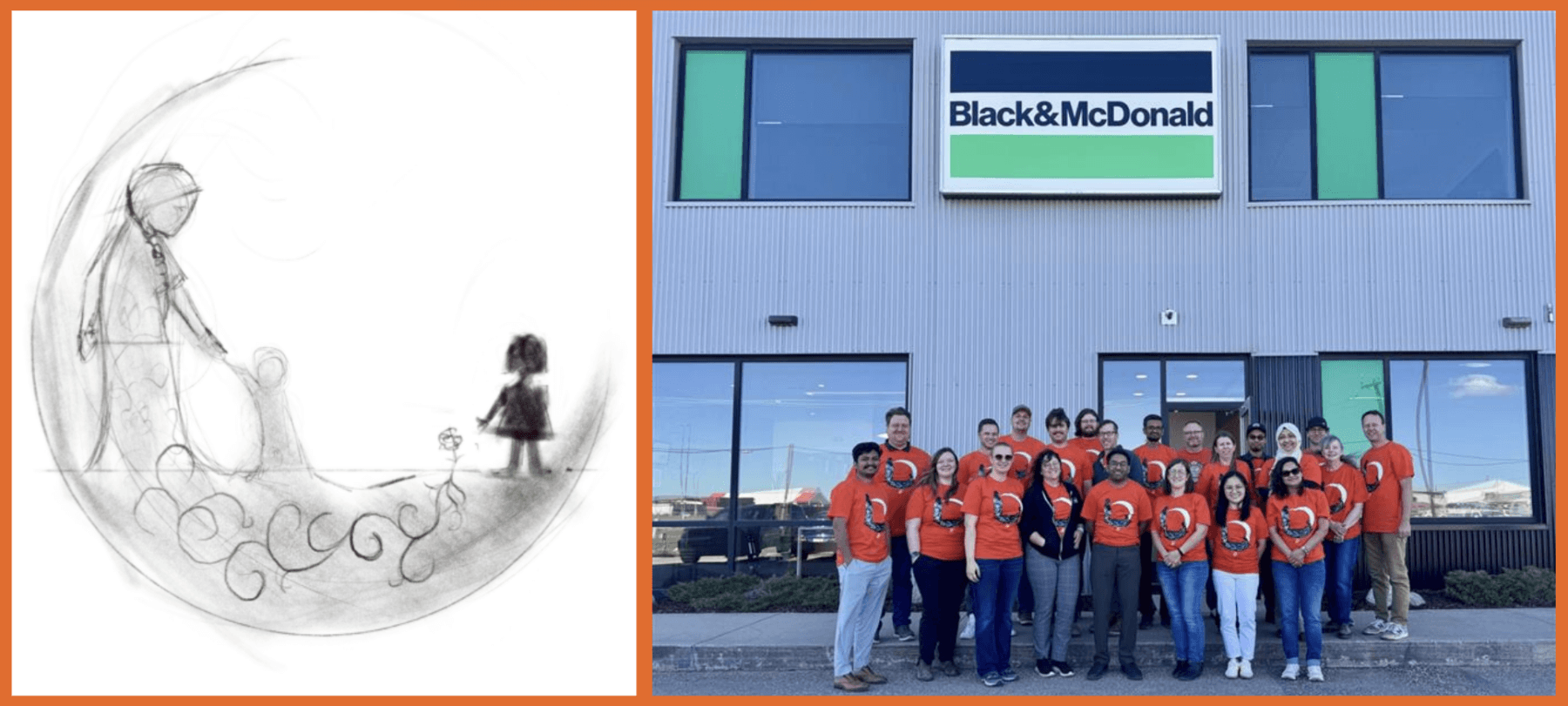
The shirts are part of a focus Plested has brought to his group: supporting Indigenous businesses. At one of his first meetings with members of the Nation, he was asked what action Black & McDonald was taking towards truth and reconciliation. The question, he said, “made me feel that they cared,” and the partnership became an opportunity for continued learning and growth. Plested’s hope is that by 2030, the share of Indigenous employees in his group will match that of Saskatchewan’s Indigenous population.
From the outside looking in, careers are where the partnership is easiest to see. Multiple members of the Nation now work at Black & McDonald as journeypersons. Goy describes employment as a key element in the partnership, because skills and training can lay roots and be shared with the next generation. Plested sees ownership as the next step from there: helping Nation members start businesses of their own and, eventually, hold an equity stake. On one contract the team was pursuing that called for fresh water on site, for example, it started working with a community member on a plan to lease him a truck, and set him up as an independent contractor.
That future rests on a structure that’s built to last, and is treated with the care to match. Representatives from both organizations meet at least twice a year, with monthly check-ins in between. And because the agreement is with Willow Cree Development Corporation, rather than the Nation’s elected leadership, it remains steady through election cycles. “Willow Cree is not going anywhere,” Esperance said.
Built to last also means room to grow. In January, both teams will sit down together to reflect on 2026 and decide what to pursue in the year ahead. Any partnership, Esperance said, has to work like a marriage: both sides need to be compatible and share the same values. “We’re not always going to agree on everything,” he said. “But we work through it together.”